
Analysis
AI drug discovery goes commercial — and meets the regulator
Isomorphic Labs' near-$3bn partnerships, the FDA's first AI credibility framework, and Texas compute.
Dr. Helena Cruz FACS
Chair, ACS Specialist Group on Computational Biology
April 2025 · 7 min read
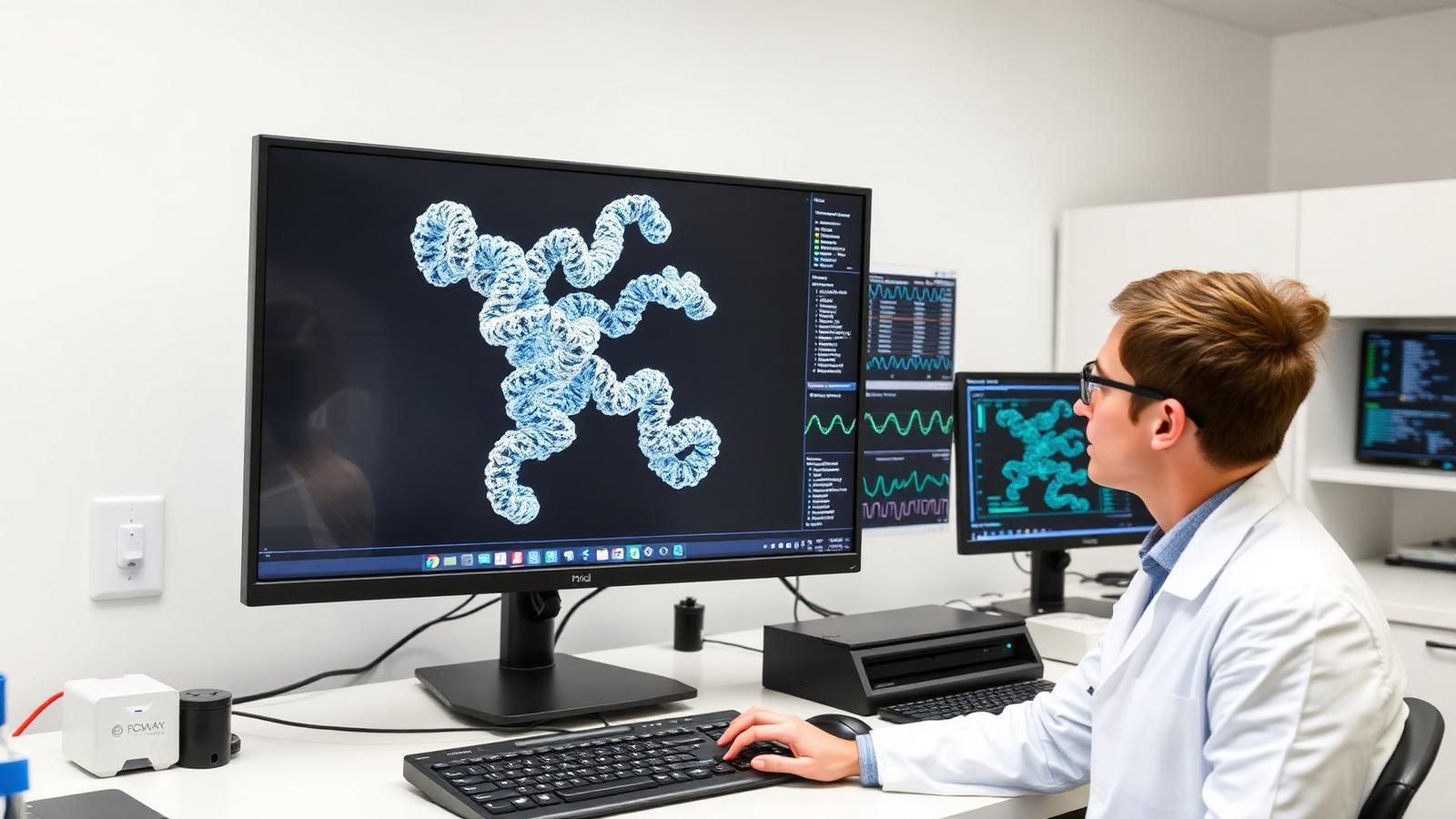
Structure prediction became a business in January 2024 and acquired a regulatory framework exactly a year later. The gap between those two dates is where most of the field's unresolved practice sits.
The deals
On 7 January 2024 Isomorphic Labs, the Alphabet drug-discovery company spun out of DeepMind, announced its first two pharmaceutical partnerships, with Eli Lilly and Novartis. The combined value was reported at close to $3 billion: approximately $83 million upfront with up to $2.9 billion in milestone payments. The agreements apply Isomorphic's AlphaFold-derived methods, extended to small-molecule and nucleic-acid design, to undisclosed targets.
The structure of those deals — modest upfront payments against large contingent milestones — is itself informative. It prices the technology as a probability shift across a portfolio rather than as a guaranteed shortcut for any single program, which is a more honest assessment than most public commentary offered at the time.
“What evidence establishes that this model is fit for the specific decision it informs, at the risk that decision carries?”
The FDA's framework
On 7 January 2025 the FDA's drug and biologics centres issued draft guidance titled 'Considerations for the Use of Artificial Intelligence to Support Regulatory Decision-Making for Drug and Biological Products', alongside parallel draft guidance on AI-enabled medical device software. Legal analyses characterised it as the agency's first detailed framework for what sponsors must disclose about AI use in submissions, organised around a risk-based credibility assessment.
The credibility assessment concept deserves attention from every member working in a regulated domain, not only pharmaceuticals. It asks a question that generalises: what evidence establishes that this model is fit for the specific decision it is being used to inform, at the level of risk that decision carries? That is a better question than 'how accurate is the model', and it is the question ACS assessment panels ask of candidates working in safety-related fields.
Compute, and the Texas position
None of this runs without capacity. The Texas Advanced Computing Center at the University of Austin brought Stampede3 to full production on 13 May 2024, supporting NSF-funded open-science genomics and computational biology workloads, and brought its AI-focused Vista system into full production in September 2024.
Central Texas also hosts genome-editing work with a considerably higher public profile. On 7 April 2025 Dallas-based Colossal Biosciences announced the birth of genetically edited gray wolf pups carrying a subset of dire-wolf-associated variants, describing the result as de-extinction. Independent geneticists disputed that framing, and the Society's view is that the accurate description is targeted multiplex editing of an extant species — a genuine technical achievement that does not require the stronger claim.
Join the professional body behind this work
ACS members receive our research first, free CPD and ethics modules every year, and a route to professional registration assessed by their peers.
Become a memberMore from ACS Insights
Optimus: a humanoid robot from prototype to production line
Four years from an AI Day slide to a converted Fremont assembly line — and still no commercial sale.
AnalysisGrok, Colossus and the compute arms race
xAI built a 100,000-GPU cluster in 122 days, doubled it, and merged twice. The externalities arrived with the electricity.
ArticleA national consortium to build trust in AI
ACS joins federal partners, universities and industry to strengthen assurance practice for high-impact AI systems.