
Briefing
Beyond chips and cars: Central Texas's space manufacturing cluster
Firefly Aerospace's Briggs and Cedar Park expansion, and a state space fund modelled on the semiconductor one.
Colonel (Ret.) Dana Whitmore FACS
Chair, ACS Specialist Group on Space Systems
November 2025 · 6 min read
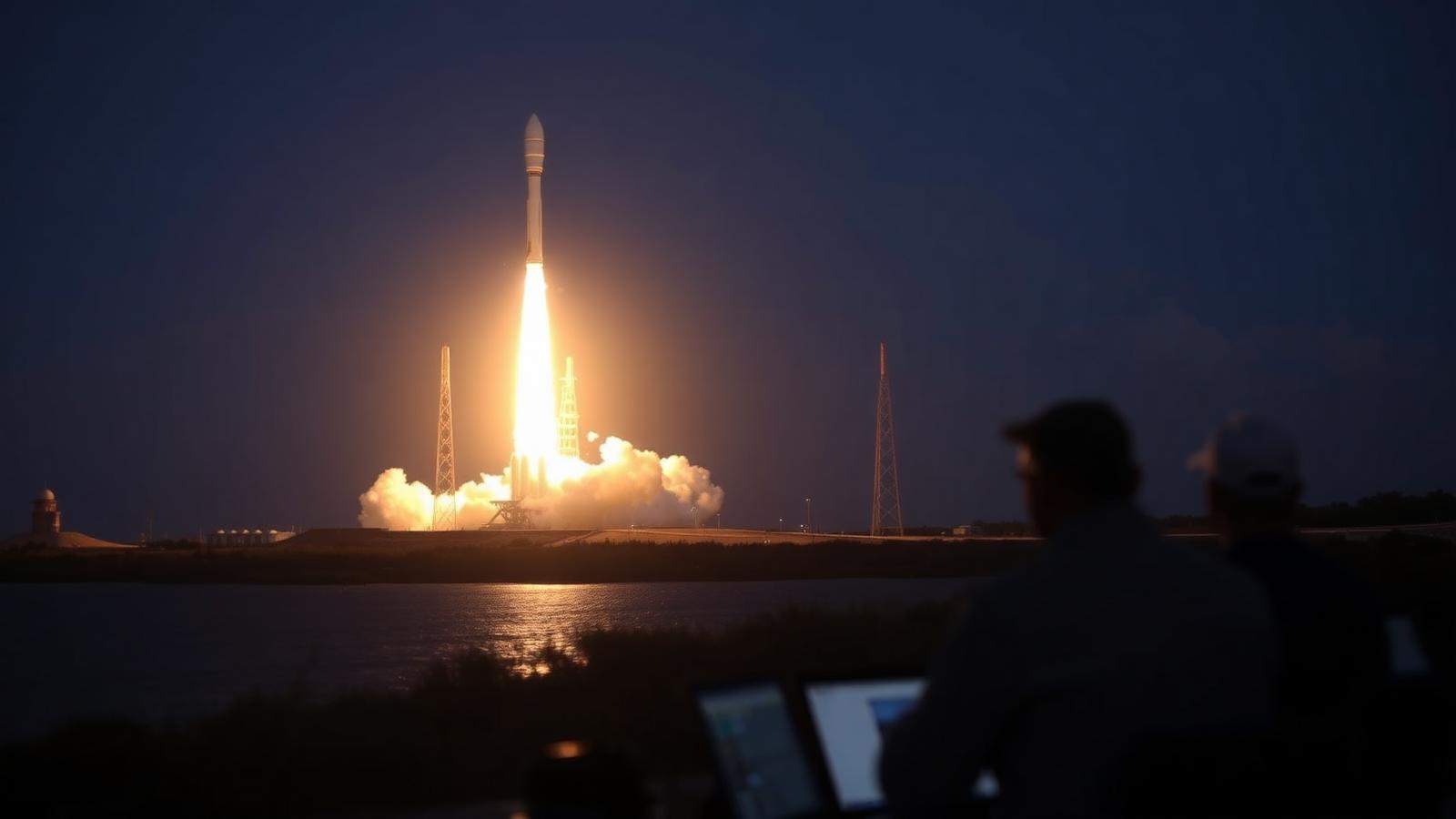
Texas built a semiconductor incentive machine and then copied it for aerospace. The result is a launch-vehicle and spacecraft manufacturing cluster inside commuting distance of Austin.
Firefly's build-out
On 28 February 2024 Firefly Aerospace held a ribbon-cutting for doubled manufacturing facilities in Briggs, Texas, supporting its medium launch vehicle programme and adding automated machinery the company said would let it build rockets substantially faster and at lower unit cost than its previous line.
On 11 February 2025 Firefly was awarded an $8.2 million grant from the Texas Space Commission to expand spacecraft manufacturing in Central Texas, with a stated workforce development and STEM outreach component. In October 2025 the company sought up to $1 million in incentives from Cedar Park for a headquarters expansion projected to add around 300 jobs, and the city council approved the package on 24 October 2025.
“Read the permit filings, not the press release. Office build-outs are routinely reported as facility programs.”
A state agency for orbit
The Texas Space Commission, created by the legislature in 2023, is the aerospace analogue of the Texas Semiconductor Innovation Fund: a state grant vehicle designed to anchor firms and their supply chains locally rather than compete on tax abatement alone. Its early awards have gone to manufacturing capacity and workforce pipelines rather than to flight hardware directly.
For the computing profession, spacecraft manufacturing is a flight-software and verification discipline. Avionics, guidance, telemetry pipelines and the ground segment are all software, developed under standards — and to reliability expectations — unfamiliar to most commercial developers.
What the Society is doing
ACS's Space Systems specialist group runs a Central Texas assessor panel for members seeking professional registration in safety-related flight software, and works with regional employers on competence definitions for verification and validation roles.
Members should be cautious with regional investment figures reported in trade press. Small office and laboratory build-outs are routinely conflated with major facility programs, and a company's flagship project is often in another state entirely. The Society's guidance to jobseekers is to read the permit filings, not the press release.
Join the professional body behind this work
ACS members receive our research first, free CPD and ethics modules every year, and a route to professional registration assessed by their peers.
Become a memberMore from ACS Insights
Optimus: a humanoid robot from prototype to production line
Four years from an AI Day slide to a converted Fremont assembly line — and still no commercial sale.
AnalysisGrok, Colossus and the compute arms race
xAI built a 100,000-GPU cluster in 122 days, doubled it, and merged twice. The externalities arrived with the electricity.
ArticleA national consortium to build trust in AI
ACS joins federal partners, universities and industry to strengthen assurance practice for high-impact AI systems.