
Analysis
The CHIPS Act and the remaking of the Texas semiconductor corridor
Federal legislation and a $17 billion Samsung fab in Taylor, Texas mark the most significant reshoring of chip manufacturing in a generation.
David Okafor
Policy Analyst, American Computer Society
September 2022 · 7 min read
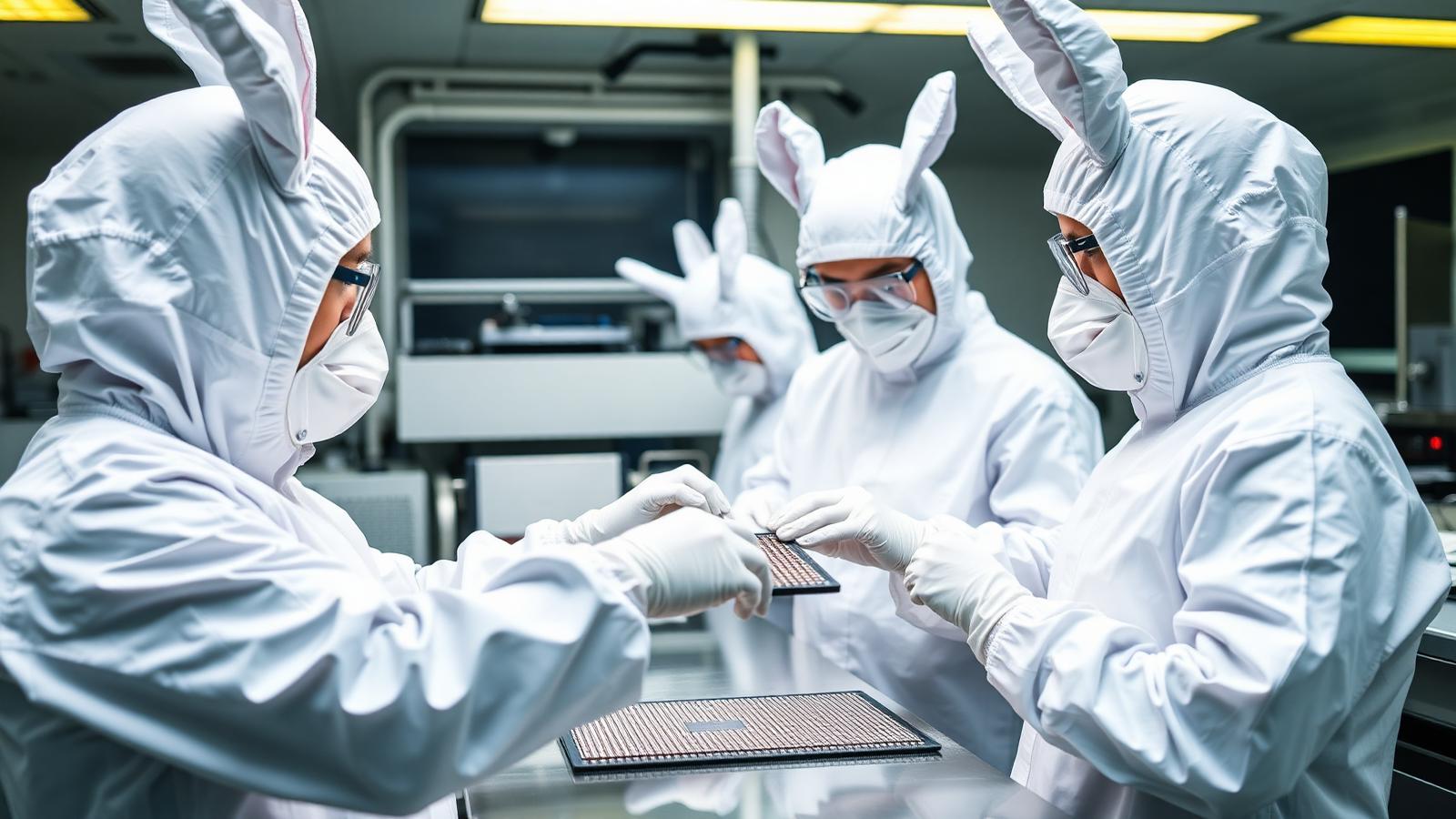
President Biden signed the CHIPS and Science Act on 9 August 2022, roughly nine months after Samsung announced a new $17 billion fabrication plant in Taylor, Texas. Together they signal a deliberate policy bet on domestic chip capacity, with Central Texas at its centre.
Two announcements, one strategy
On 24 November 2021 Samsung Electronics announced it would build a new semiconductor fabrication facility in Taylor, Texas, roughly thirty miles northeast of Austin, at an investment the company and Texas officials put at approximately $17 billion — described at the time as the largest foreign direct investment in the state's history. The plant is intended to produce advanced logic chips for mobile, 5G, high-performance computing and AI applications.
Nine months later, on 9 August 2022, President Biden signed the CHIPS and Science Act into law, authorising roughly $52 billion in subsidies and incentives for domestic semiconductor manufacturing and research, alongside tax credits for chip plant investment. The legislation was a direct response to years of warnings that the United States had become dependent on a small number of overseas facilities for advanced chip production.
“Building a fab is a five-year undertaking; building the regional talent pipeline to operate it reliably takes longer still.”
Why Central Texas
Samsung's decision built on an existing base: the company has operated a fabrication plant in Austin since the 1990s, and the broader region already hosted a dense cluster of semiconductor and electronics firms, engineering talent from the University of Texas system, and established supply relationships. Taylor's selection extended the Tech Triangle outward, betting that proximity to existing fabs, workforce pipelines and utilities would offset the multi-year construction timeline advanced chip plants require.
The CHIPS Act's funding is explicitly conditioned: recipients of the largest grants must share excess profits with the government and are restricted from expanding leading-edge capacity in countries of concern for a decade, provisions intended to ensure subsidies produce durable domestic capacity rather than one-off announcements.
The workforce constraint
Industry analyses accompanying the CHIPS Act consistently identified workforce, not capital, as the binding constraint on new fab capacity: the semiconductor industry has warned of a shortfall of tens of thousands of technicians and engineers needed to staff planned US facilities by the end of the decade. Building a fab is a five-year undertaking; building the regional talent pipeline to operate it reliably takes longer still.
- Expand community college and university partnerships aligned to fab technician and process engineering roles.
- Track CHIPS Act workforce-development funding through to measurable regional employment outcomes.
- Coordinate immigration and visa pathways for specialised semiconductor engineering talent.
- Monitor subsidy conditions to ensure public investment yields durable domestic capacity.
What the Society advises
The Society views the CHIPS and Science Act as a rare instance of industrial policy matched to a genuine national capability gap, but cautions that its success will be measured in trained engineers and technicians, not groundbreaking ceremonies. The Society calls on employers and educational institutions across the Tech Triangle to treat workforce development as inseparable from the capital investment itself.
Join the professional body behind this work
ACS members receive our research first, free CPD and ethics modules every year, and a route to professional registration assessed by their peers.
Become a memberMore from ACS Insights
Optimus: a humanoid robot from prototype to production line
Four years from an AI Day slide to a converted Fremont assembly line — and still no commercial sale.
AnalysisGrok, Colossus and the compute arms race
xAI built a 100,000-GPU cluster in 122 days, doubled it, and merged twice. The externalities arrived with the electricity.
ArticleA national consortium to build trust in AI
ACS joins federal partners, universities and industry to strengthen assurance practice for high-impact AI systems.