
Briefing
A $35 board and a skills crisis: the Raspberry Pi launches
The Raspberry Pi Foundation's low-cost computer sold out within hours, reigniting a transatlantic debate about how computing is taught in schools.
Thomas Okafor
Senior Editor, Skills and Education, American Computer Society
February 2012 · 6 min read
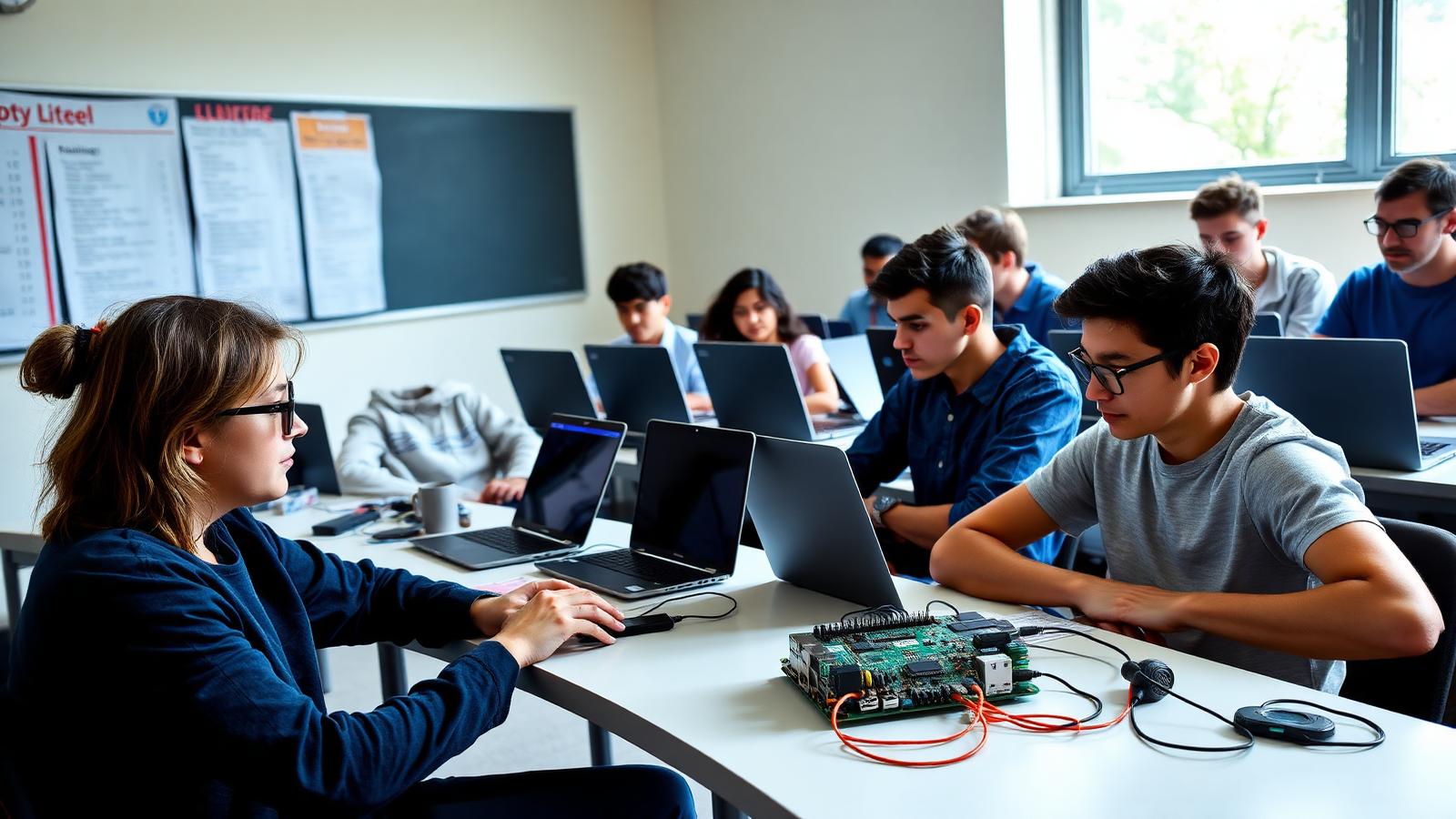
On 29 February 2012 the UK-based Raspberry Pi Foundation released its first credit-card-sized computer, priced at $35. Distributor sites crashed within minutes under demand, exposing an appetite for hands-on computing education that formal schooling had largely stopped meeting.
Sold out in minutes
The Raspberry Pi Model B went on sale through distributors RS Components and element14 at nine o'clock in the morning on 29 February 2012. Both retailers' websites were overwhelmed within minutes; RS Components reported around 700 orders per second at peak, and the initial production run of roughly 10,000 units sold out almost immediately, alongside tens of thousands of backorders. Founder Eben Upton and colleagues at the Raspberry Pi Foundation had conceived the board several years earlier after observing a steady decline in the number and preparedness of applicants to Cambridge University's computer science programme.
The board's specification was deliberately modest — a Broadcom ARM system-on-chip, 256 megabytes of RAM in the original model, and no case — but its price point put a genuinely programmable general-purpose computer within reach of pocket money, school clubs and libraries in a way that consumer PCs had not been for a generation.
“Enthusiasm for computing was never the problem. Access to affordable hardware, and curricula that treated programming as a literacy, were.”
A response to a measurable decline
The launch landed amid growing alarm on both sides of the Atlantic about computing education. In the United Kingdom the school ICT curriculum was widely criticised by industry and academics as teaching office-software proficiency rather than programming or computational thinking; the Royal Society published its influential review of computing in schools in 2012. In the United States, the same period saw the launch of Code.org in 2013 and mounting concern that too few American students were exposed to rigorous computer science before university.
The Raspberry Pi's appeal was that it offered something curricula did not: a cheap, bare, programmable device that invited tinkering rather than passive use, alongside free tools for Python and Scratch.
Why the Society took notice
For a body concerned with the pipeline of competent, ethically grounded practitioners entering the profession, the Pi's runaway demand was a useful signal: enthusiasm for computing was not the problem. Access to affordable hardware, and a curriculum that treated programming as a literacy rather than an elective, were. The device's subsequent adoption in American classrooms, maker spaces and university outreach programmes through 2013 and beyond bore this out.
- Affordable, general-purpose hardware measurably lowers the barrier to computational literacy.
- Curriculum reform and hardware access are complementary, not substitutable, interventions.
- Early exposure to programming correlates with the depth of technical grounding practitioners bring into the workforce a decade later.
What the Society advises
The Society encourages members to volunteer in K-12 outreach, mentoring and open-hardware education initiatives as a matter of professional obligation, not charity. It also recommends that state education authorities treat computer science as a core literacy, backed by teacher training funded at a level commensurate with its economic importance, and that employers recognise community and classroom volunteering as legitimate continuing professional development.
Join the professional body behind this work
ACS members receive our research first, free CPD and ethics modules every year, and a route to professional registration assessed by their peers.
Become a memberMore from ACS Insights
Optimus: a humanoid robot from prototype to production line
Four years from an AI Day slide to a converted Fremont assembly line — and still no commercial sale.
AnalysisGrok, Colossus and the compute arms race
xAI built a 100,000-GPU cluster in 122 days, doubled it, and merged twice. The externalities arrived with the electricity.
ArticleA national consortium to build trust in AI
ACS joins federal partners, universities and industry to strengthen assurance practice for high-impact AI systems.