
Explainer
RFdiffusion and the arrival of designer proteins
A diffusion model bolted onto a structure-prediction network turned protein design from search into generation.
Dr. Helena Cruz FACS
Chair, ACS Specialist Group on Computational Biology
March 2024 · 6 min read
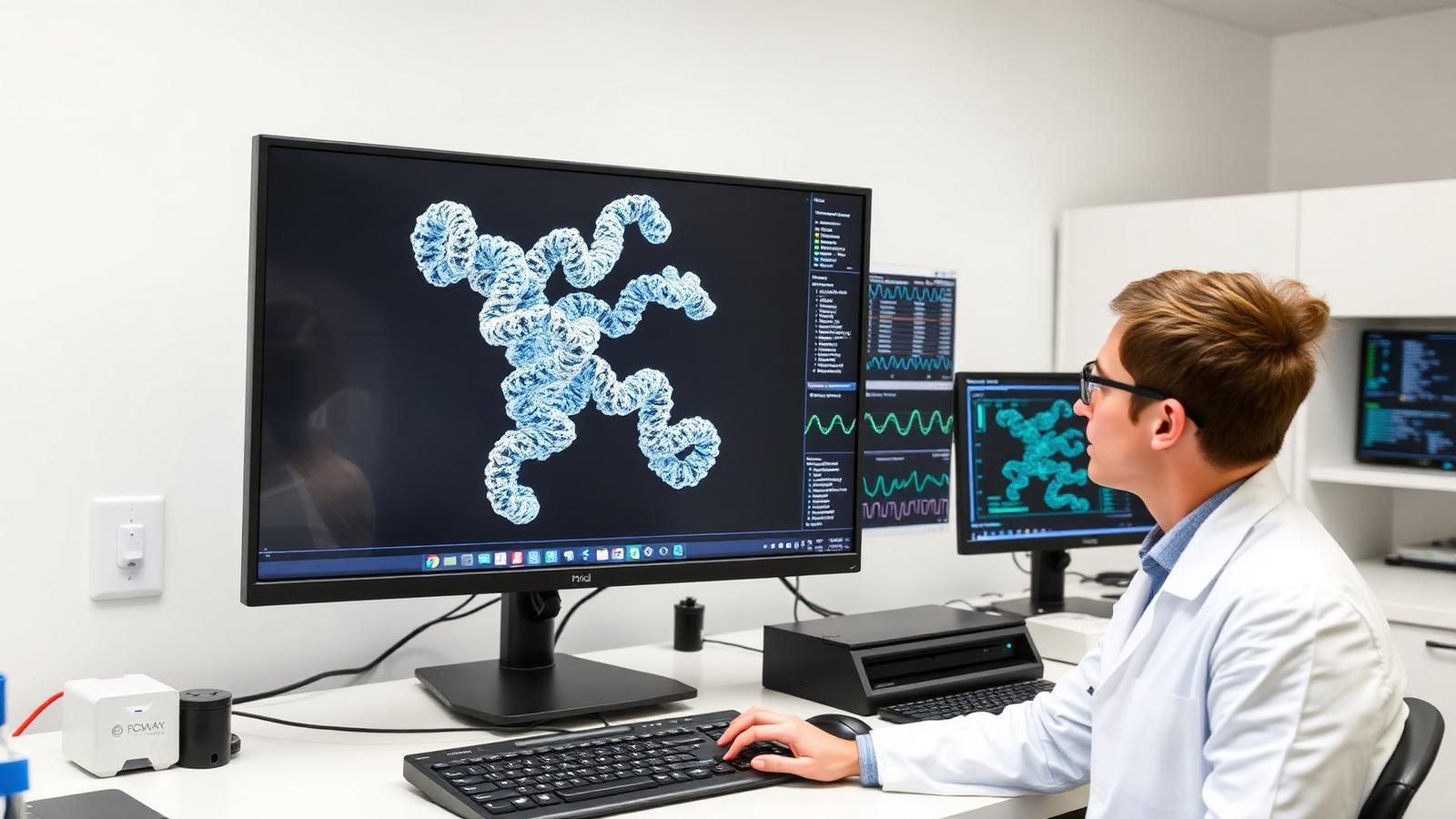
RFdiffusion did for protein design what image diffusion models did for pictures: it replaced searching a library of existing things with generating a new one to specification.
What was released, and when
The Baker Lab at the University of Washington's Institute for Protein Design released RFdiffusion as free, open-source software on 30 March 2023. The accompanying paper, 'De novo design of protein structure and function with RFdiffusion', was published in Nature on 11 July 2023, demonstrating de novo binder design and symmetric protein architectures with hundreds of AI-generated proteins validated experimentally.
Technically, RFdiffusion adds a generative diffusion layer on top of RoseTTAFold, the lab's structure-prediction network. Nature Biotechnology described the effect as expanding RoseTTAFold's power: the same learned representation of what makes a plausible fold is used not to score a candidate but to denoise toward one.
“Generation is no longer the constraint. The ranking function that decides which designs reach the bench is.”
The licensing divergence
RFdiffusion was released under terms permitting both non-profit and for-profit use. AlphaFold3's weights, by contrast, were released for academic non-commercial use only. The two most consequential structure tools of the period therefore took opposite positions on commercial access.
This is not a footnote for practitioners. A computational biology group choosing a pipeline is choosing a downstream commercialisation path at the same time, and the choice is difficult to reverse once methods, validation data and regulatory submissions have accreted around one tool.
Where the bottleneck moved
Generation is no longer the constraint. Wet-lab validation is. A design pipeline can now propose more candidate binders in an afternoon than a laboratory can express, purify and assay in a quarter, which relocates the hard engineering problem to triage: which of ten thousand plausible designs justify bench time.
That is a computing problem with a professional dimension. The ranking function that decides which designs are synthesised encodes assumptions about what counts as a promising molecule, and those assumptions are rarely written down. ACS guidance to members working in this field is to version and document the triage criteria with the same rigour applied to the generative model itself.
- 30 Mar 2023 — RFdiffusion released open-source by the Baker Lab.
- 11 July 2023 — RFdiffusion published in Nature (doi:10.1038/s41586-023-06415-8).
- 9 Oct 2024 — David Baker shares the Nobel Prize in Chemistry for computational protein design.
Join the professional body behind this work
ACS members receive our research first, free CPD and ethics modules every year, and a route to professional registration assessed by their peers.
Become a memberMore from ACS Insights
Optimus: a humanoid robot from prototype to production line
Four years from an AI Day slide to a converted Fremont assembly line — and still no commercial sale.
AnalysisGrok, Colossus and the compute arms race
xAI built a 100,000-GPU cluster in 122 days, doubled it, and merged twice. The externalities arrived with the electricity.
ArticleA national consortium to build trust in AI
ACS joins federal partners, universities and industry to strengthen assurance practice for high-impact AI systems.