
Report
Thirteen flights: Starship's test campaign and the Raptor line
From a four-minute failure in April 2023 to a V3 vehicle deploying next-generation Starlink satellites.
Colonel (Ret.) Dana Whitmore FACS
Chair, ACS Specialist Group on Space Systems
August 2026 · 7 min read
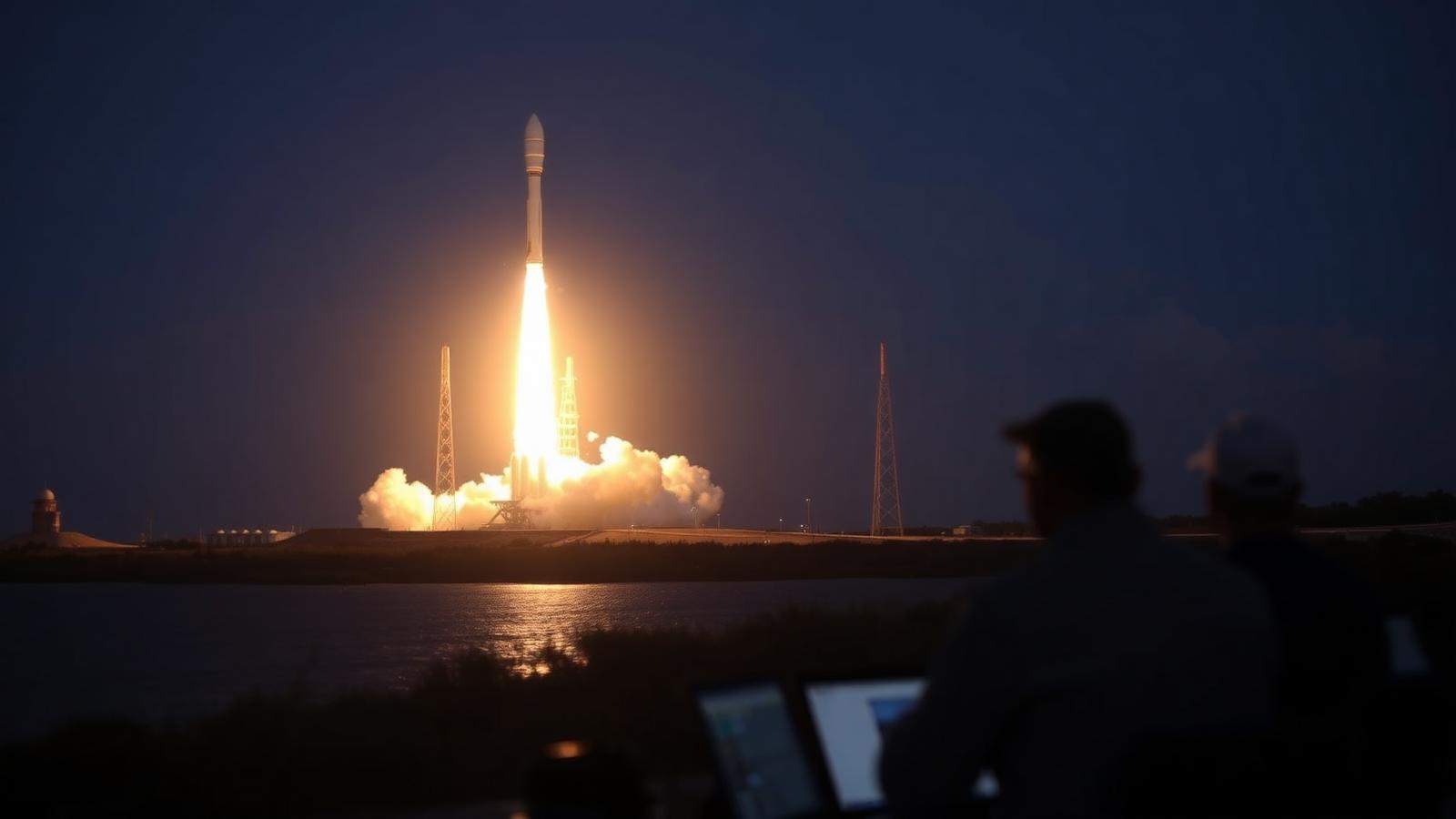
SpaceX's flight-test philosophy converts public failures into schedule. Whether that is a model other safety-critical industries can borrow is a question worth asking precisely.
The campaign
Starship's first integrated flight test launched from Starbase on 20 April 2023 and ended with the vehicle destroyed roughly four minutes after liftoff; it was briefly the most powerful rocket ever flown, surpassing the Soviet N1. Flight 3, on 14 March 2024, was the first to reach the intended orbital velocity and complete a full-duration second-stage burn, though the vehicle broke up during re-entry after a mission lasting 49 minutes and 41 seconds. A V2 vehicle was lost on a test flight on 16 January 2025.
As of 24 July 2026 the programme had flown thirteen integrated flight tests, with eight successes and five failures on the public tally. Flight 13 launched from Starbase at 5:51pm Central on 24 July 2026 — the second flight of the V3 configuration, the first to deploy next-generation Starlink V3 satellites, with all 33 Raptor 3 engines igniting on the Super Heavy booster. A single-engine static fire in preparation for Flight 14 was reported around 20 August 2026.
“The transferable lesson is instrumentation discipline and publishing anomalies — not tolerance for loss of vehicle.”
Engines and cadence
Raptor 3 was publicly test-fired in August 2024. Third-party accounts place its thrust near 280 tonnes-force with specific impulse around 350 seconds at a dry mass close to 1,525kg — roughly a third lighter than Raptor 2 with substantially simplified external plumbing. These figures come from secondary reporting rather than a published SpaceX datasheet and should be cited as such.
Cadence tells a parallel story. SpaceX contributed the bulk of a record 259 global orbital launch attempts in 2024, and Falcon 9 flew 165 times in 2025 within a global record of well over 320 attempts. By late August 2026 the company had logged its hundredth orbital mission of the year, and a single booster reached a record 37th flight.
Iteration as a method, and its limits
The programme's method — fly early, instrument heavily, accept loss of vehicle as data — has produced a rate of learning that traditional aerospace development has not matched. It works because the failure domain is uncrewed, over water, under a licensing regime that anticipates it.
Members should resist the generalisation that follows. The same method applied to a crewed vehicle, a medical device or a road vehicle is not fast iteration; it is uncontrolled experimentation on people. The transferable part is the instrumentation discipline and the willingness to publish anomalies, not the tolerance for loss.
Join the professional body behind this work
ACS members receive our research first, free CPD and ethics modules every year, and a route to professional registration assessed by their peers.
Become a memberMore from ACS Insights
Optimus: a humanoid robot from prototype to production line
Four years from an AI Day slide to a converted Fremont assembly line — and still no commercial sale.
AnalysisGrok, Colossus and the compute arms race
xAI built a 100,000-GPU cluster in 122 days, doubled it, and merged twice. The externalities arrived with the electricity.
ArticleA national consortium to build trust in AI
ACS joins federal partners, universities and industry to strengthen assurance practice for high-impact AI systems.