
Analysis
Tesla's bet on end-to-end AI: from FSD v12 to the AI5 chip
Replacing 300,000 lines of hand-written control code with a neural network, and the silicon that has to run it.
Dr. Anthony Reyes FACS
Chair, ACS Specialist Group on Artificial Intelligence
May 2026 · 7 min read
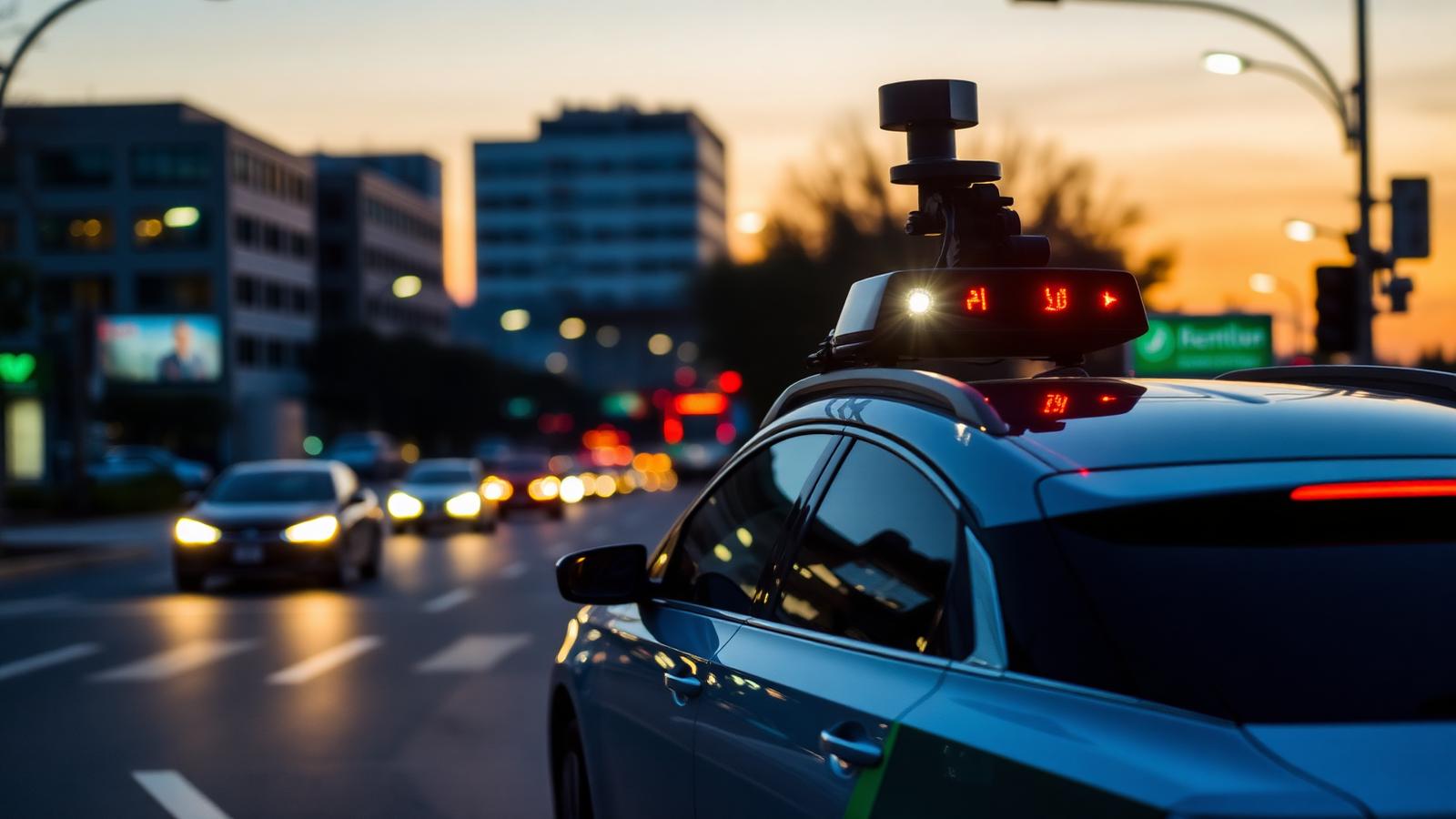
The v12 rewrite is the most consequential architectural decision in production driver assistance, and it is also the one that makes the system hardest to assure.
The rewrite
FSD Beta v12 began limited public rollout around 26 November 2023. Tesla described it as the first version in which driving control runs end-to-end on neural networks rather than through more than 300,000 lines of hand-written C++ heuristics. Wider customer rollout was confirmed on 22 January 2024, with a larger push in mid-March 2024.
Removing the heuristic layer removes something else with it: the intermediate representations an engineer could inspect. In a modular stack, a bad stop at an intersection can be traced to perception, prediction or planning. In an end-to-end stack, the same failure is a property of the whole network, and the diagnostic tools are statistical rather than causal. That is a genuine assurance problem, not a rhetorical one, and it applies to every organisation adopting this architecture — not only Tesla.
“In an end-to-end stack a bad stop at an intersection is a property of the whole network. The diagnostics become statistical, not causal.”
The silicon question
The HW3 computer, introduced in 2019, remains in much of the deployed fleet, and Tesla has acknowledged that it cannot run the latest end-to-end stacks at full capability. HW4 is the current production dual-SoC inference computer in Cybertruck and refreshed Model 3 and Model Y vehicles.
Musk stated in April 2026 that the next-generation AI5 inference chip had taped out, with mass production targeted for mid-2027 and fabrication reported at both TSMC and Samsung. Reported performance and memory multiples relative to HW4 vary substantially between outlets and should be treated as estimates rather than a published specification. AI5 has been positioned for Optimus and cluster use as well as vehicles.
Dojo's end
Tesla's Dojo training supercomputer, built around the custom D1 chip, was shut down in August 2025. Reporting on 7 August 2025 indicated the team was being disbanded; Musk publicly confirmed the decision on 11 August 2025, describing Dojo as an evolutionary dead end, and the programme's lead departed the company. The stated rationale was that dividing resources between bespoke training silicon and inference chips no longer made sense, with training moving to NVIDIA and AMD GPUs alongside Tesla's own AI4 and AI5 inference parts.
The Society's reading is that Dojo's cancellation is the clearest available data point on vertical integration in AI infrastructure. Custom training silicon has to beat a merchant roadmap that improves every year across a much larger amortisation base. Very few organisations can win that race, and the discipline to stop is itself good engineering.
Join the professional body behind this work
ACS members receive our research first, free CPD and ethics modules every year, and a route to professional registration assessed by their peers.
Become a memberMore from ACS Insights
Optimus: a humanoid robot from prototype to production line
Four years from an AI Day slide to a converted Fremont assembly line — and still no commercial sale.
AnalysisGrok, Colossus and the compute arms race
xAI built a 100,000-GPU cluster in 122 days, doubled it, and merged twice. The externalities arrived with the electricity.
ArticleA national consortium to build trust in AI
ACS joins federal partners, universities and industry to strengthen assurance practice for high-impact AI systems.