
Report
Texas's chip belt: Samsung, TI and the CHIPS Act windfall
Two federal awards, two fab programs and a state fund reshaped semiconductor manufacturing between Taylor and Sherman.
Priya Raghunathan FACS
Chair, ACS Specialist Group on Semiconductors
January 2026 · 7 min read
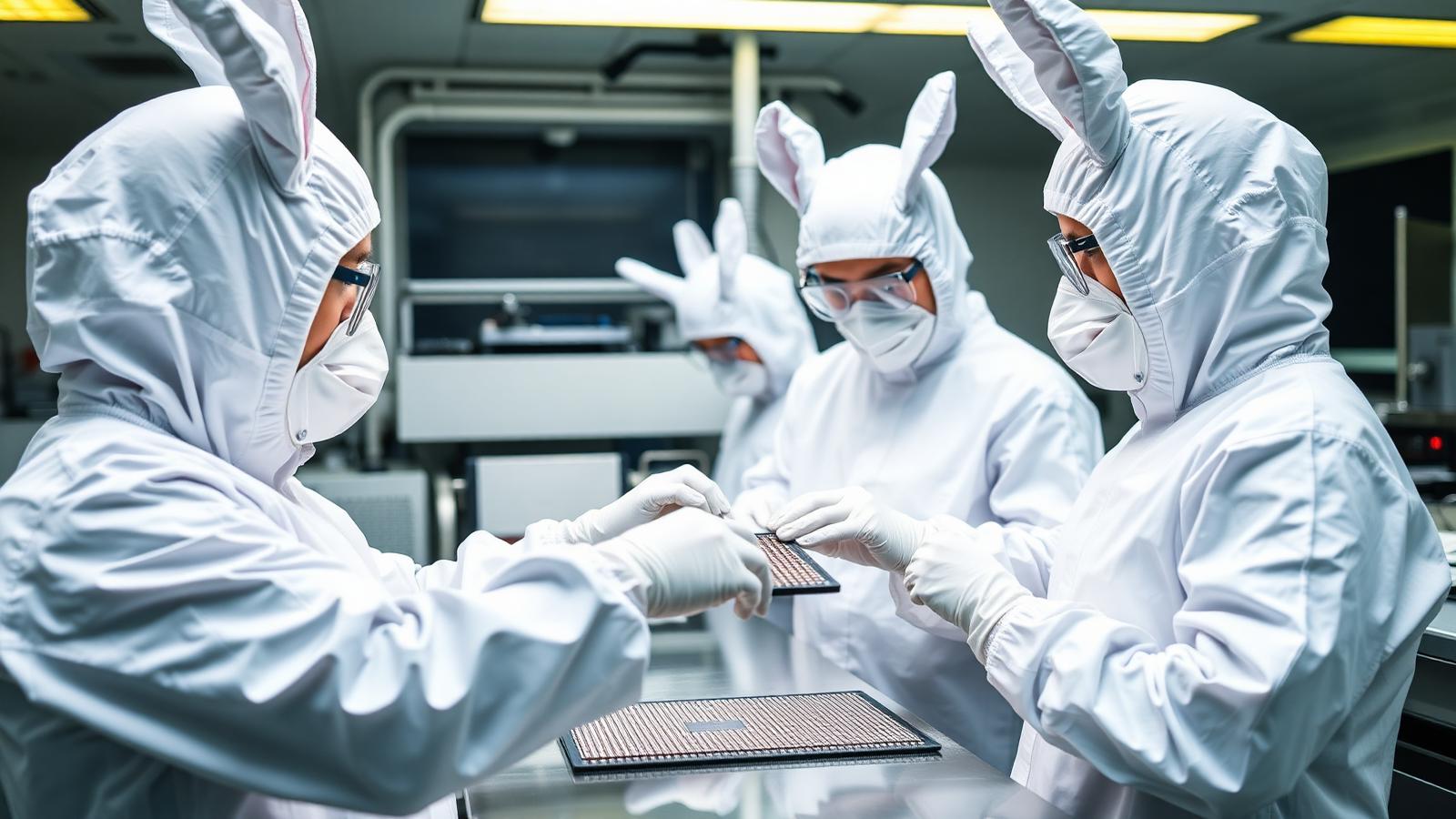
Federal money set the direction; state instruments and a shortage of qualified process and equipment engineers now set the pace.
The awards
On 15 April 2024 the US Department of Commerce announced preliminary terms of up to $6.4 billion in CHIPS Act funding for Samsung's Taylor, Texas ecosystem. The finalised award, confirmed in December 2024, was up to $4.745 billion in direct funding to Samsung Austin Semiconductor, covering both the new Taylor fabs and modernisation of the existing Austin site, within a company commitment exceeding $40 billion of Texas investment through 2030.
On 20 December 2024 Texas Instruments concluded a CHIPS award agreement for up to $1.6 billion in direct funding across three 300mm fabs — SM1 and SM2 in Sherman, Texas, and one in Lehi, Utah. TI's Sherman site is planned for up to four fabs and a potential total investment of up to $40 billion. On 17 December 2025 the company began production at its newest Sherman 300mm fab.
- 15 Apr 2024 — up to $6.4bn preliminary CHIPS terms announced for Samsung in Texas.
- Dec 2024 — award finalised at up to $4.745bn direct funding.
- 20 Dec 2024 — Texas Instruments award agreement for up to $1.6bn across three fabs.
- 17 Dec 2025 — TI begins production at its newest Sherman 300mm fab.
“A modern fab is a software and process-control problem wearing a building. Separate announced capital from installed capacity.”
The state instruments
Texas did not wait for federal policy. House Bill 5174, the state's own CHIPS act, took effect in June 2023 and created the Texas Semiconductor Innovation Fund and the Texas Semiconductor Innovation Consortium, giving the state a direct grant mechanism and a standing industry-academic body. The state government points to Texas leading the nation in semiconductor manufacturing exports for fifteen consecutive years.
Not every project has moved forward. NXP terminated a Chapter 380 economic development agreement with the City of Austin tied to a roughly $290 million expansion, seeking state-level incentives instead. Infineon's Austin fab changed hands to SkyWater Technology — an ownership transfer, not new capacity. Members reading regional investment totals should separate announced capital from installed capacity; the two diverge substantially.
The workforce constraint
A 300mm fab is a software and process-control problem wearing a building. Every tool on the floor produces telemetry, and yield depends on statistical process control, fault detection and classification, and increasingly on machine-learned models that must be validated to the same standard as the physical recipes they influence.
The Society's accreditation work in Texas has focused on this junction. Computing graduates are entering fabs without exposure to metrology, design of experiments or the regulatory expectations of manufacturing quality systems. ACS recommends that accredited programs in the region offer at least one module in industrial data engineering built with a fab partner, and the Society's Austin chapter maintains a register of employers willing to host it.
Join the professional body behind this work
ACS members receive our research first, free CPD and ethics modules every year, and a route to professional registration assessed by their peers.
Become a memberMore from ACS Insights
Optimus: a humanoid robot from prototype to production line
Four years from an AI Day slide to a converted Fremont assembly line — and still no commercial sale.
AnalysisGrok, Colossus and the compute arms race
xAI built a 100,000-GPU cluster in 122 days, doubled it, and merged twice. The externalities arrived with the electricity.
ArticleA national consortium to build trust in AI
ACS joins federal partners, universities and industry to strengthen assurance practice for high-impact AI systems.