
Blog
Why the fab is a software problem now
Advanced packaging, yield analytics and the growing overlap between semiconductor and data engineering careers.
Karen Lindqvist MACS
Chair, ACS Semiconductors Specialist Group
June 2026 · 6 min read
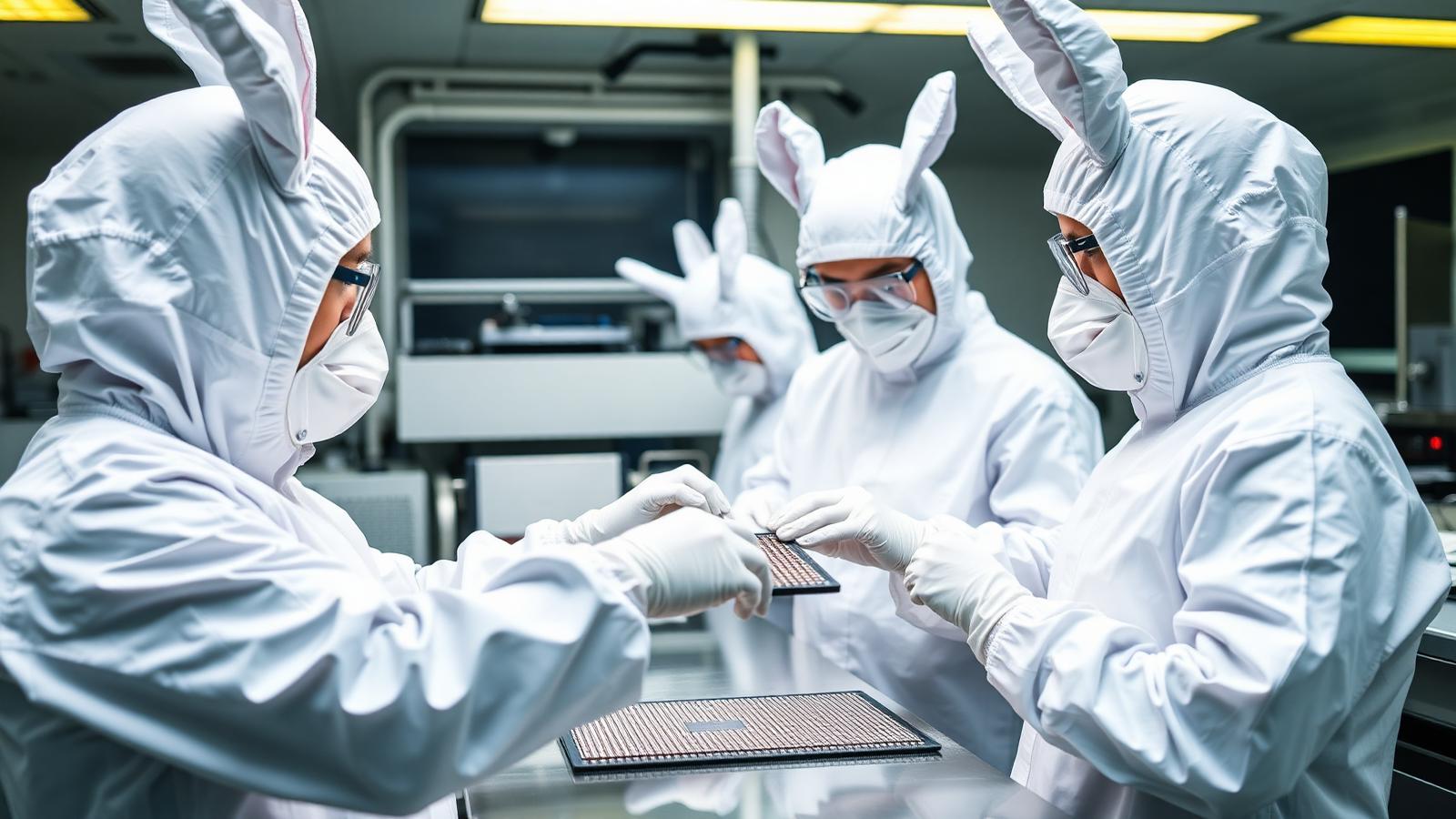
The Texas Triangle's fabs are hiring data engineers as fast as process engineers. The specialist group's chair explains why the disciplines are converging — and what it means for members' careers.
Yield is an inference problem
A modern fab generates an extraordinary volume of measurement: inline metrology, defect inspection, equipment telemetry, environmental data, and electrical test at multiple stages. Deciding which of those signals explains a yield excursion is, unavoidably, a statistical inference problem conducted under time pressure with partially observed causes. The people who are good at it increasingly look like data engineers who learned process physics, or process engineers who learned experimental design and version control.
That convergence is why our specialist group's most oversubscribed events are not about lithography. They are about data pipelines, provenance and reproducibility — the unglamorous infrastructure that determines whether a yield analysis can be trusted the second time it is run.
“The differentiating skill in semiconductors this decade is rigorous data practice, not another tool.”
Advanced packaging raises the stakes
As performance gains migrate from transistor scaling to heterogeneous integration, a single finished part may combine dies from different processes, vendors and vintages. The economic consequence is that a defect escapes further before it is caught, and the engineering consequence is that traceability across organizational boundaries becomes a first-order requirement rather than a compliance chore.
Traceability across boundaries is a software architecture problem. It concerns identity, schemas, retention and the discipline to record what you measured alongside how you measured it.
- Measurement provenance that survives handoffs between suppliers.
- Reproducible analysis environments, versioned with the data they consumed.
- Clear ownership of derived metrics that drive scrap and rework decisions.
- Change control on analytics, matching the rigor applied to process recipes.
What this means for members
For members in semiconductors, the career advice is straightforward: the differentiating skill this decade is rigorous data practice, not another tool. For members outside semiconductors, the region's fabs represent one of the few places where classical engineering discipline and modern data work are being fused under real constraints — and that experience transfers unusually well into safety-critical and assurance roles.
The specialist group runs monthly sessions in Austin and Taylor, and members are welcome regardless of current sector.
Join the professional body behind this work
ACS members receive our research first, free CPD and ethics modules every year, and a route to professional registration assessed by their peers.
Become a memberMore from ACS Insights
Optimus: a humanoid robot from prototype to production line
Four years from an AI Day slide to a converted Fremont assembly line — and still no commercial sale.
AnalysisGrok, Colossus and the compute arms race
xAI built a 100,000-GPU cluster in 122 days, doubled it, and merged twice. The externalities arrived with the electricity.
ArticleA national consortium to build trust in AI
ACS joins federal partners, universities and industry to strengthen assurance practice for high-impact AI systems.